
The impact of Bad Bunny’s Super Bowl performance on UM-Dearborn’s Latine community
By Joseph Juliano
More than 128 million households tuned in to watch Super Bowl LX on Sunday, Feb. 8, 2026. But for many homes and academic circles, viewers didn’t come for the football. Some were there to watch someone else: global music superstar Bad Bunny.
The Super Bowl was held at Levi’s Stadium in Santa Clara, California. Every year, the National Football League selects an entertainer to perform at the highly awaited Super Bowl Halftime Show. This year, the NFL selected Benito Antonio Martínez Ocasio, known across the world as the “King of Latin Trap” or, more commonly, Bad Bunny.
For Ocasio, the pressure was on; he had to keep his promise of showing off Puerto Rican and Latine culture to the world. For 13 minutes, he serenaded the world with songs like “Tití Me Preguntó,” “El Apagón” and “BAILE INoLVIDABLE.”
While Bad Bunny, a SoundCloud-rapper-turned-global-superstar, was not the first Latino artist to perform at the Super Bowl, his performance was the first Spanish-language dominant solo performance in Super Bowl history.
Jorge González del Pozo, U-M Dearborn professor of Spanish, was quick to describe Bad Bunny as one of the most influential Latino artists in recent years, underscoring the impact of his original music on mainstream media.
“(His) unique music mixes reggaeton with traditional Puerto Rican rhythms and has helped Spanish-language music reach audiences around the world,” he said. “He is also known for proudly representing Puerto Rican culture and speaking about social issues on the island”
For academics like González del Pozo, he sees the performance as a progression for Latino people in U.S. society.
“The Latin(e) community already has its own strong voice … but moments like this recognize its cultural contributions to U.S. society,” he said.
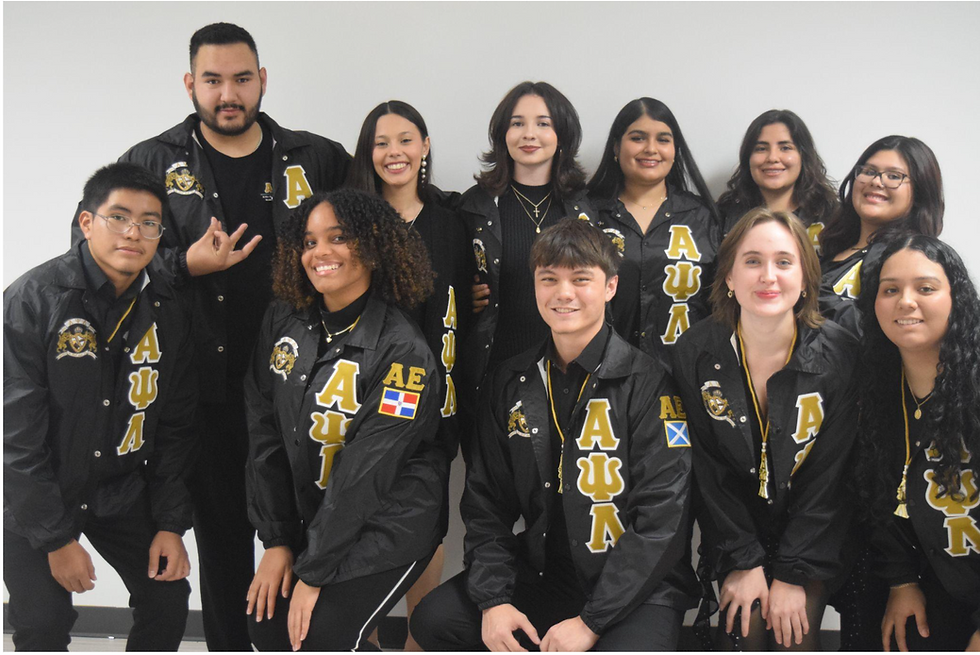
Alongside members of the booming Hispanic community in Metro Detroit, Latin American students at U-M Dearborn felt a personal significance to the performance. Yaritza Campos, president of U-M Dearborn’s Alpha Psi Lambda chapter (a Latine-interest co-ed fraternity) said she had an emotional experience watching alongside her Puerto Rican and Mexican American family members.
“Growing up with my Puerto Rican side of the family, going to the island, seeing the references in the Super Bowl was super impactful,” she said. “It even made my own family cry.”
Through Bad Bunny’s goal of representing Puerto Ricans in mainstream American culture, Campos and her family felt seen.
Campos described how the spectacle of popular Latin American symbols and Puerto Rican roots — such as crowd-operated fields of sugarcane — resonated with her family. Campos and her family felt that rather than enforcing stereotypes or romanticizing the island, Ocasio portrayed an accurate and prideful representation. In her perspective, the musician wanted to show the day-to-day life of Puerto Ricans for a wide audience.
“(The performance) showed these events, locations and very significant things that Puerto Ricans see on the island and remember to this day,” she said. “It meant that the story is being told and that it’s not forgotten.”
For Latine students like Campos, Bad Bunny’s performance was a valuable representation, shedding a positive light on the community.


Comments